
Why Nozick?
Nozick Consulting is named after Robert Nozick (1938–2002), the American philosopher who, like few others, showed why your rights and the fruits of your work deserve protection.
Who was Robert Nozick?

Robert Nozick was born in Brooklyn, New York, and was a professor of philosophy at Harvard University for many years. His best-known book, Anarchy, State, and Utopia (1974), won the National Book Award in 1975 and is regarded as one of the most important works of twentieth-century political philosophy.
The book asks a simple but far-reaching question: what may a state force people to do, and where does that end? Nozick places the burden of proof on the state, not on the individual. For us, too, that is the starting point.
"Individuals have rights, and there are things no person or group may do to them (without violating their rights)."
Robert Nozick, Anarchy, State, and Utopia (1974), opening sentence
His core ideas
Rights as a boundary
Every person has rights that no one may violate, the government included. Nozick calls them "side constraints": they draw a line around what others may do to you, and what you may do to others.
The minimal state
According to Nozick, only a state that limits itself to protection against force, theft and fraud, and to enforcing agreements, is justified. Anything beyond that comes at the expense of people's freedom.
Just holdings
What you have acquired fairly, or received fairly from someone else, is yours. What makes something fair is not what a distribution looks like in the end, Nozick argues, but how it came about. His example became world-famous: suppose everyone starts with a fair distribution of money, and a million fans each pay an extra 25 cents to watch the basketball player Wilt Chamberlain play. By the end of the season Chamberlain is far richer than anyone else, yet nobody did anything that was not voluntary. If the first distribution was fair and everyone paid voluntarily, the new distribution is fair too. Anyone who wants to undo that inequality must therefore keep interfering in what people voluntarily agree among themselves.
Taxation and labour
Nozick argued that taxing earnings from labour is comparable to forced labour: part of your time is then spent working for goals someone else sets for you. It is a thought-provoking claim that philosophers still debate, and for us a starting point.
The Tale of the Slave
One of the best-known passages in Anarchy, State, and Utopia is a thought experiment: the Tale of the Slave. Nozick starts with a slave who works under a cruel master, entirely unfree. Step by step his situation improves: the master becomes milder, demands less, gives him free time and lets him keep part of what he earns.
Then the master changes too. Instead of one master there are ten thousand, who decide together by majority vote how much, and at what, the slave must work. In the end the slave is given a vote in that decision as well: one voice among ten thousand and one.
Nozick's question to the reader is: at what point in this story does the slave stop being a slave? And if part of your work is claimed by a democratic majority, how does that differ in any essential way from the start of the story? It is a sharp question that makes you think, and it explains what we stand for: no one, not even a majority, simply has a claim on your time and what it produces.
Want to hear the story in a few minutes? In this short video Tom Woods (TomWoodsTV) explains it clearly.
Watch the video on YouTube ↗Opens YouTube in a new tab.What this means for us
Our name refers to that tradition: those who work hard are entitled to the fruits of that work, and this places limits on what a state may force you to do.
In practice this means advising within the law. We help entrepreneurs and wealthy private individuals reduce their tax burden legally, protect their assets and, if it suits you, emigrate. We never give advice that breaks the law. Within the law, far more is possible than most people think.
Further reading
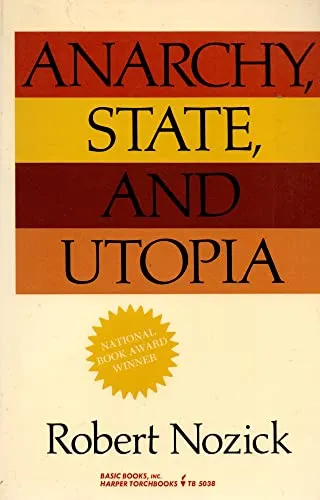
- Robert Nozick, Anarchy, State, and Utopia (1974)
- Robert Nozick, The Examined Life (1989)
- Robert Nozick in the Stanford Encyclopedia of Philosophy
- Robert Nozick on Wikipedia
Curious how we can help you?
Get in touch for a personal conversation about tax planning, asset protection and emigration.